


Polypropylene Melt Flow Index (MFI): Testing, Interpretation and Importance for Plastics Processing
Polypropylene Melt Flow Index (MFI): Testing, Interpretation and Importance for Plastics Processing
Melt Flow Index (MFI) is one of the most widely used parameters in plastics processing. It helps manufacturers understand how easily a molten polymer flows under specified test conditions and supports the selection of suitable materials for different manufacturing processes.
For companies working with polypropylene (PP), the melt flow index is particularly important in injection moulding, extrusion and plastic quality control. It provides valuable information about flow characteristics, material consistency and potential processing behaviour.
However, a higher melt flow index does not automatically indicate a better polymer. The correct MFI depends on the processing technology, product geometry and mechanical requirements of the finished component.
For recycled polypropylene, understanding MFI is especially valuable. Changes in melt flow rate between production batches may affect processing stability and the consistency of manufactured products.
This article explains what the polypropylene melt flow index means, how melt flow index testing works, how to interpret the results and why MFI is important when selecting PP regranulate.
Key Takeaways: Understanding Melt Flow Index
- Melt Flow Index (MFI) describes the flowability of a thermoplastic material under specified temperature and load conditions.
- The standardised melt mass-flow rate (MFR) is expressed in grams per 10 minutes (g/10 min).
- Melt volume-flow rate (MVR) describes the volume of polymer flowing through a standard die and is expressed in cm³/10 min.
- Melt flow index testing is performed using established methods such as ISO 1133 and ASTM D1238.
- Polypropylene is commonly tested at 230°C under a 2.16 kg load.
- Higher MFI values generally indicate lower melt viscosity under comparable test conditions, while lower values often indicate greater resistance to flow.
- MFI should be considered alongside mechanical properties, polymer composition and batch-to-batch consistency.
1. What Is Melt Flow Index (MFI)?
Melt Flow Index, also called melt index or flow index in some industrial contexts, describes how easily a thermoplastic polymer flows when heated and subjected to a defined load.
The melt flow index test measures the quantity of molten polymer passing through a standardised die during a specified period.
MFI is commonly expressed as the mass of material extruded in 10 minutes under defined test conditions.
For example, an MFI value of 12 g/10 min means that the test corresponds to a mass flow rate of 12 grams of polymer per 10 minutes under the stated temperature and load.
This does not mean that the polymer will flow at the same rate inside an injection moulding machine or extrusion line. Actual processing conditions are considerably more complex.
The melt flow index of plastics is therefore a useful comparative parameter rather than a complete description of material behaviour.
Melt Flow Index (MFI), Melt Flow Rate (MFR) and MVR – What Is the Difference?
The terminology used in technical data sheets can sometimes cause confusion.
MFI and MFR are often used interchangeably in industrial communication, although MFR is the standardised designation for the mass-based result.
MVR describes a related measurement based on volume rather than mass.
| Parameter | Full name | Unit | What it describes |
|---|---|---|---|
| MFI | Melt Flow Index | Usually g/10 min | Common industrial term for melt flowability |
| MFR | Melt Mass-Flow Rate | g/10 min | Mass of molten polymer flowing through a die under specified conditions |
| MVR | Melt Volume-Flow Rate | cm³/10 min | Volume of molten polymer flowing under specified conditions |
The mass flow rate and volume flow rate are related through the density of the polymer melt.
If the melt density under the relevant test conditions is known, MFR can be calculated from MVR.
However, these values should not be compared directly without accounting for their different units and the conditions used during testing.
2. How Is the Melt Flow Index Test Performed?
Melt flow index testing is carried out using an extrusion plastometer, sometimes called a melt flow index tester, melt flow indexer or plastometer.
The equipment heats a polymer sample and applies a controlled load to a piston, forcing molten material through a die with specified dimensions.
The amount of material flowing through the die is used to determine the melt flow rate.
Melt Flow Index Testing According to ISO 1133 and ASTM D1238
ISO 1133 and ASTM D1238 are established standards for determining the flow properties of thermoplastic materials.
The precise method, temperature and load must be selected according to the material and applicable specification.
For polypropylene, a commonly used test condition is:
| Test parameter | Typical PP condition |
|---|---|
| Test temperature | 230°C |
| Applied load | 2.16 kg |
| Mass flow rate unit | g/10 min |
| Volume flow rate unit | cm³/10 min |
| Common test standards | ISO 1133, ASTM D1238 |
The applied load generates force on the piston head, which pushes the molten polymer through the standard die.
The die geometry, measurement procedure, timing and temperature control are important because they influence the accuracy and repeatability of the test.

Method A – Measuring Melt Mass-Flow Rate
In the mass-based procedure, commonly described as Method A under ISO 1133, the polymer is heated under controlled conditions and extruded through the die.
Sections of extruded material are collected and weighed.
The measured mass and collection time are then used to calculate the melt mass-flow rate, expressed in g/10 min.
Method B – Measuring Melt Volume-Flow Rate
In Method B, the movement of the piston is measured over time.
Using the relevant dimensions of the measuring system, this movement allows the volume of polymer displaced during the test to be calculated.
The result is reported as melt volume-flow rate in cm³/10 min.
MFR can also be derived when the melt density is known under the specified conditions.
Why Are Temperature and Load Important?
Both temperature and the applied load influence the test result.
A higher temperature generally reduces the viscosity of a polymer melt, while a different load changes the stress applied during measurement.
Consequently, the same polymer sample may produce different MFI values under different testing conditions.
This is why technical data sheets should report not only the measured value but also the test temperature, applied load and method.
A melt flow index value without its test conditions is insufficient for a reliable material comparison.
3. High vs Low Melt Flow Index: How Should MFI Values Be Interpreted?
Understanding high and low MFI values is essential when selecting plastics for manufacturing.
Under comparable test conditions, a high melt flow rate generally indicates that the polymer flows more easily through the test die.
A low melt flow index indicates greater resistance to flow.
Neither result automatically establishes whether the material is suitable for a particular application.
What Does a High Melt Flow Index Mean?
A high melt flow index generally corresponds to lower apparent melt viscosity under the relevant testing conditions.
Such materials may be useful for injection moulding processes requiring relatively easy mould filling.
Typical examples include thin-walled containers, intricate components and certain high-speed moulding applications.
Depending on the polymer grade and process conditions, greater flowability can help the molten polymer reach narrow or distant regions of the mould cavity.
However, excessively high flowability for a particular application may contribute to processing difficulties, including flash formation.
High MFI is therefore not necessarily desirable in every manufacturing process.
What Does a Low Melt Flow Index Mean?
A low melt flow index generally indicates higher resistance to flow under the same testing conditions.
For comparable polymer grades, lower MFI can be associated with higher average molecular weight and greater melt viscosity.
Materials with these characteristics may be suitable for extrusion processes where stable melt behaviour or melt strength is important.
However, not all extrusion applications require low MFI, and the correct value must be determined for the specific process.
Is MFI Inversely Proportional to Viscosity?
MFI and viscosity are related, but they are not simple mathematical inverses under all conditions.
A higher MFI often correlates with lower apparent viscosity when similar polymers are measured under identical conditions.
Nevertheless, molten polymers are generally non-Newtonian materials. Their viscosity changes with temperature and shear rate.
The relationship between MFI and viscosity therefore depends on the polymer’s molecular structure and flow behaviour.
A single MFI value cannot replace a full rheological analysis.
4. Melt Flow Index, Molecular Weight and Polymer Melt Viscosity
The flow properties of a polymer are closely connected to its molecular structure.
Molecular weight and molecular weight distribution influence how polymer chains move and interact in the molten state.
For comparable polypropylene materials, a higher average molecular weight often results in greater melt viscosity and a lower melt flow rate.
Conversely, lower molecular weight may be associated with easier flow and higher MFI.
However, this relationship is not sufficient to predict every aspect of polymer processing.
Why Does Molecular Weight Distribution Matter?
Two polypropylene grades may have nearly identical melt flow index values but different molecular weight distributions.
This can lead to differences in their response to shear, processing pressure and temperature.
Additives, fillers and variations in polymer composition may further affect flow characteristics.
Therefore, identical MFI values do not guarantee identical processing behaviour.
MFI Is an Indirect Measure of Polymer Flow Behaviour
The melt flow index test measures flow under a particular set of conditions, typically involving relatively low shear rates compared with some industrial processing operations.
It does not directly determine intrinsic viscosity, average molecular weight or the complete viscosity curve.
Intrinsic viscosity is a separate polymer characterisation parameter determined using appropriate solution-based measurements.
For applications requiring more detailed rheological information, additional tests can be used to evaluate melt viscosity over a range of shear rates.
MFI remains valuable because it offers a relatively quick and practical method for comparing and monitoring thermoplastic materials.
5. Polypropylene Properties and Why MFI Matters
Polypropylene is one of the most widely used thermoplastic polymers.
It belongs to the polyolefin family and is valued for its relatively low density, chemical resistance, mechanical properties and versatility in processing.
Different polypropylene grades are designed for different manufacturing technologies and product requirements.
These grades may vary in stiffness, impact resistance, melt flow characteristics and thermal behaviour.
For this reason, selecting polypropylene requires more than identifying a target MFI.
Mechanical Strength and Melt Flow Rate
MFI is not a direct measure of mechanical strength.
A polypropylene grade with high MFI does not necessarily have lower impact resistance than every grade with lower MFI.
Likewise, a low MFI value does not guarantee superior tensile strength or durability.
Mechanical properties depend on factors including polymer type, molecular structure, modifiers, fillers and processing conditions.
For a reliable evaluation, MFI should be considered together with parameters such as tensile properties, impact strength and stiffness.
6. Why Is MFI Important for Recycled Polypropylene?
Melt flow index is particularly useful in the quality control of recycled polypropylene and PP regranulate.
During recycling, polymer materials may be exposed to additional heat, shear and processing cycles.
Under some conditions, these processes can contribute to changes in polymer chain structure.
For polypropylene, molecular chain scission caused by degradation may increase MFI.
However, a high melt flow rate alone does not demonstrate that the material has undergone excessive degradation.
MFI is also influenced by the composition of the incoming material, the presence of additives, the mixture of polymer grades and the processing history of the recyclate.
Batch-to-Batch Consistency of PP Regranulate
For industrial polymer processors, consistency between deliveries may be as important as the nominal melt flow index itself.
Significant variations in MFI can require adjustments to processing temperature, injection speed, pressure or other machine settings.
Such changes may affect cycle stability, mould filling and the properties of finished products.
Monitoring MFI between production batches can therefore support more predictable manufacturing.
However, the permitted variation should be defined in relation to the requirements of the specific application.
A suitable quality control approach may also include measurements of density, mechanical properties and other relevant material characteristics.
7. How Does MFI Affect Injection Moulding?
In injection moulding, molten polymer must flow through the machine, runner system and mould cavity before cooling and solidifying.
The material’s flow characteristics influence the pressure and processing conditions needed to fill the mould.
High MFI and Thin-Walled Injection Moulding
Polypropylene with relatively high MFI may be advantageous for products with thin walls or complicated geometry.
Improved flowability can make mould filling easier under suitable processing conditions.
However, excessive flowability may also increase the tendency for flash or create other processing challenges.
The correct melt flow index must therefore be selected in relation to the product design and moulding parameters.
Low MFI and Processing Pressure
When polypropylene has relatively low MFI, greater resistance to flow may require adjustments to the injection moulding process.
Possible changes include injection pressure, melt temperature and injection speed.
However, modifying machine settings must remain within the safe operating limits of the equipment and the processing recommendations for the material.
If the material cannot reliably fill the mould, choosing a grade with more suitable flow characteristics may be preferable.
8. Melt Flow Index in Polypropylene Extrusion
Extrusion places different demands on a polymer melt than injection moulding.
The material is continuously transported through an extrusion system and shaped using a die.
Depending on the application, stable pressure, consistent output and controlled melt behaviour are particularly important.
Polypropylene extrusion can be used to manufacture products such as profiles, sheets and other technical components.
Some extrusion processes benefit from materials with relatively low melt flow rates, especially where melt strength and dimensional stability are important.
However, no universal MFI range applies to every extrusion process.
The appropriate grade depends on the equipment, extrusion conditions, product dimensions and required performance.
Injection Moulding vs Extrusion – Why Does MFI Selection Differ?
Injection moulding frequently involves filling a closed mould cavity within a short period.
Extrusion involves continuous material flow through a forming die.
Because these processes create different flow conditions, the same polypropylene grade may not perform equally well in both.
A suitable material selection must account for the intended process rather than relying on MFI alone.
9. Polypropylene Applications Across Different Industries
Polypropylene is used in a wide range of industries because its properties can be adapted to different manufacturing processes.
Automotive Industry
Polypropylene and modified PP compounds are used in vehicle interiors, covers, trims and other technical components.
Depending on the application, relevant properties may include stiffness, impact resistance, dimensional stability and weight.
Packaging Industry
Polypropylene is widely used for containers, closures and rigid packaging.
Certain grades are selected for injection moulding processes where flowability and cycle performance are important.
Applications involving food contact require appropriate material selection and compliance with relevant regulations.
Medical Products
Specific polypropylene grades may be used in certain medical products and disposable components.
However, medical applications involve strict material and regulatory requirements. General-purpose recycled PP should not be assumed suitable for these uses.
Chemical and Industrial Products
Polypropylene’s resistance to many chemicals allows suitable grades to be used in tanks, containers and technical components.
Actual chemical resistance must be evaluated for the specific substance, concentration, temperature and exposure time.
Garden and Household Products
PP is also used in garden furniture, storage containers, household accessories and various moulded products.
For outdoor applications, additional requirements such as UV resistance and impact performance may be relevant.
10. Can MFI Values Be Compared Across Different Plastics?
Melt flow testing is used for polypropylene, polyethylene and many other thermoplastic polymers.
However, different materials are often tested at different temperatures and loads.
For example, polypropylene is commonly evaluated at 230°C under 2.16 kg, while polyethylene may be tested at 190°C under 2.16 kg.
A numerical MFI value obtained for PP should therefore not be treated as directly equivalent to the same number reported for PE under different conditions.
Even with identical test conditions, two different polymers may display different rheological behaviour.
Material selection must account for the wider set of relevant technical properties.
11. Is Melt Flow Index Enough to Evaluate Polymer Quality?
MFI is an important parameter, but it cannot describe the complete performance of a plastic material.
Two polymers with similar MFI values may differ in:
- Density and composition.
- Tensile and impact properties.
- Stiffness and dimensional stability.
- Filler or additive content.
- Thermal stability.
- Contamination levels.
- Processing behaviour.
- Batch-to-batch consistency.
For demanding applications, additional laboratory tests and production trials may therefore be necessary.
The purpose of melt flow index testing is to provide useful information for material selection and process control, not to replace a complete technical evaluation.
12. How to Select the Right MFI for PP Regranulate
When choosing recycled polypropylene, start with the requirements of the finished product and the manufacturing process.
A practical material selection should address the following questions:
- Will the material be used for injection moulding or extrusion?
- What is the geometry of the product?
- Does the product have thin walls or complex flow paths?
- Which mechanical properties are required?
- What MFI range is suitable for the processing equipment?
- How consistent are the material properties between batches?
- Which additional characteristics must be confirmed before production?
These questions help determine whether the material is likely to meet the requirements of the intended application.
For new materials, appropriate production trials remain an important part of the selection process.
13. Melt Flow Index and Material Selection at ML Polyolefins
At ML Polyolefins, recycled polyolefins are an important part of industrial material recovery and reuse.
When selecting PP regranulate, the melt flow index is one of the technical characteristics that can help determine whether a material is suitable for a particular manufacturing process.
However, MFI must always be considered alongside polymer composition, mechanical requirements and the expected behaviour of the material during processing.
For manufacturers, selecting a suitable recyclate is therefore not simply a matter of choosing the highest or lowest MFI value.
The objective is to identify a material whose properties are appropriate for the product and the production process.
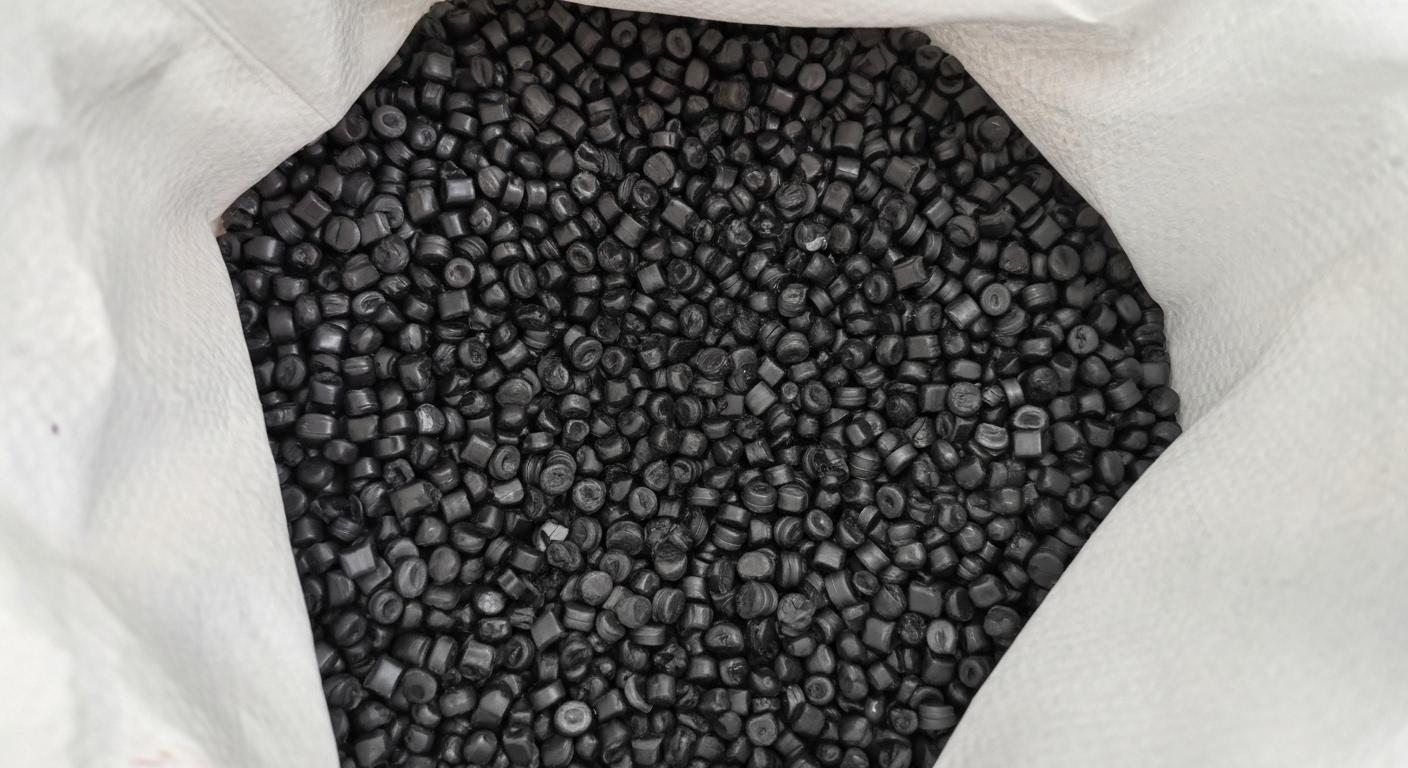
If you are looking for recycled polypropylene or want to discuss material requirements for injection moulding or extrusion, contact the ML Polyolefins team.
FAQ – Melt Flow Index, MFR and MVR
What does Melt Flow Index (MFI) mean?
MFI describes the flowability of a molten thermoplastic polymer under defined temperature and load conditions. The mass-based result is commonly expressed in g/10 min.
What is the difference between MFI and MFR?
MFI is a commonly used industrial term, while MFR is the standardised designation for melt mass-flow rate. In many technical discussions, they refer to the same mass-based flow parameter.
What is Melt Volume-Flow Rate (MVR)?
MVR describes the volume of molten polymer passing through a standardised die under specified conditions. It is expressed in cm³/10 min.
What is the standard test condition for polypropylene MFI?
A commonly used condition for polypropylene is 230°C under a 2.16 kg load. Other conditions may be used when required by the applicable specification.
Does higher MFI mean lower viscosity?
For comparable polymers tested under the same conditions, higher MFI generally corresponds to lower apparent melt viscosity. However, MFI does not provide a complete viscosity measurement.
What does a low melt flow index indicate?
Low MFI generally indicates greater resistance to flow under the test conditions. For similar polymer grades, it may also be associated with higher molecular weight.
Why can the MFI of recycled polypropylene change?
Changes may result from differences in feedstock composition, processing history, additives, degradation and recycling conditions. MFI changes do not identify a single cause without further analysis.
What is a flow rate ratio?
A flow rate ratio compares melt flow rates measured under different specified loads, typically at the same temperature. It can provide additional comparative information about how a material responds to changing test conditions. The ratio must be interpreted using the exact test conditions and should not be treated as a complete rheological measurement.
Is MFI sufficient to determine the quality of PP regranulate?
No. MFI should be evaluated alongside mechanical properties, composition, contamination levels, processing requirements and material consistency.
Why is consistent MFI important in industrial production?
Consistent MFI can contribute to more predictable processing behaviour, reduce the need for machine adjustments and support stable production conditions. Its acceptable variation depends on the requirements of the specific product and process.

