




History of Plastics – From the First Polymers to Modern Materials
History of Plastics – From the First Polymers to Modern Materials
Plastics have revolutionised industry and everyday life in just 150 years. From the first experiments with nitrocellulose to advanced engineering polymers, their development has transformed the way we design, manufacture, build and package almost everything around us. This article takes a closer look at the key milestones in the history of plastics and explains how these materials have evolved into the modern polymers we use today.
Key facts
- The history of plastics dates back to the 19th century, with Parkesine introduced in 1862 and celluloid developed in 1869. Bakelite, invented in 1907, is considered the first fully synthetic plastic.
- The period between the 1930s and 1950s brought major breakthroughs, including polyethylene, PVC, polystyrene and nylon, while the Second World War accelerated their mass production.
- Plastics owe their popularity to properties such as low density, corrosion resistance and excellent electrical insulation, but many conventional polymers can persist in the environment for decades or even centuries.
- Global plastics production exceeds 400 million tonnes per year, while the global recycling rate for major polymers remains at only around 6.5%.
- Today, the plastics industry is increasingly focused on recycling, circular economy solutions and bio-based or biodegradable materials, with the biodegradable plastics market growing at a double-digit annual rate.
Introduction – what are plastics and why does their history matter?
The history of plastics began in the 19th century with materials such as Parkesine and celluloid. A major breakthrough came in 1907 with the invention of Bakelite, widely regarded as the first fully synthetic plastic.
Plastics are a group of materials based on polymers – long molecular chains made up of repeating chemical units known as monomers. A polymer alone is not necessarily a finished plastic product. Additives such as plasticisers, pigments, fillers and stabilisers are often introduced to achieve specific mechanical, thermal, chemical or visual properties.
The earliest plastics were produced by modifying natural raw materials such as cellulose. Over time, they evolved into a vast family of synthetic polymers used throughout industry and everyday life.
Understanding this history is therefore relevant not only to chemistry students and plastics professionals, but also to anyone interested in how plastics developed, where they are used and what environmental challenges they create.
The following sections explore the most important stages in the development of plastics, their role in different industries, the challenges associated with plastic waste and recycling, and the growth of biopolymers, new technologies and regulations shaping the future of the industry.
The beginnings – the 19th century and the predecessors of modern plastics
In the mid-19th century, engineers and inventors were looking for affordable substitutes for materials such as ivory, horn and wood.
Parkesine was one of the first semi-synthetic plastics to be presented publicly. Alexander Parkes introduced it at the 1862 International Exhibition in London. The material was based on nitrocellulose combined with solvents and oils. Although innovative, it was relatively expensive and prone to deformation.
Celluloid was developed in 1869 by John Wesley Hyatt, initially as a substitute for ivory in billiard balls. Hyatt combined nitrocellulose, which accounted for approximately 70% of the material, with around 20–30% camphor. The resulting material softened at temperatures of approximately 90°C and hardened again after cooling.
Celluloid soon found applications in everyday products such as combs, buttons, piano keys and photographic film.
Its high flammability and limited chemical resistance restricted its use, but celluloid demonstrated an important principle: materials could be deliberately engineered to provide specific properties rather than simply being extracted from nature.

The Bakelite breakthrough, excellent electrical insulation and the birth of fully synthetic plastics
Bakelite, invented in 1907 by Leo Baekeland, was the first commercially successful fully synthetic plastic.
It was produced through the condensation of phenol and formaldehyde and belongs to the group of thermosetting plastics. Once cured, Bakelite does not melt again when heated, which distinguishes it from thermoplastics such as celluloid.
Typical applications of Bakelite during the first half of the 20th century included:
- telephone and radio housings,
- light switches and electrical insulation components, where its excellent electrical insulation properties were particularly valuable,
- pot and pan handles,
- jewellery,
- various industrial components.
With a density of approximately 1.3 g/cm³ and good electrical and thermal performance, Bakelite became an important material in the rapidly developing electrical industry.
Its commercial success encouraged further research into synthetic resins and polymers. Chemical companies invested in research laboratories, while macromolecular chemistry gradually developed into a scientific discipline of its own.
The interwar period and the 1930s – the birth of modern polymers
During the 1920s, Hermann Staudinger demonstrated that polymers consist of very long molecular chains rather than loose aggregates of smaller molecules. He was awarded the Nobel Prize in Chemistry in 1953 for his work.
This fundamental concept made it possible to understand polymer structures and, eventually, to design plastics with specific properties.
Several materials that remain important today were developed or commercialised during the same period.
PVC became significantly more practical during the 1920s following advances in plasticisation using solvents and ester-based plasticisers. BASF began producing polystyrene commercially in the 1930s.
Polyethylene was discovered accidentally in 1933 at ICI during high-pressure experiments. Today, polyethylene is one of the most widely produced groups of plastics in the world.
These new materials were increasingly engineered to deliver specific characteristics such as chemical resistance, low water absorption, flexibility and ease of processing. Plastics were no longer viewed merely as inexpensive substitutes for natural materials – they were becoming a new class of functional engineering materials.
The Second World War and the post-war plastics boom
Nylon was developed in 1935 by a team led by Wallace Carothers at DuPont and transformed the textile industry.
Initially used in products such as toothbrush bristles and stockings, nylon quickly gained strategic importance during the Second World War, when it was used for parachute cords, ropes and technical fibres.
The war significantly accelerated the production and development of plastics. Shortages of traditional raw materials increased demand for alternatives such as polyethylene for radar insulation, PVC for moisture-resistant protective coatings and various engineering polymers.
After 1945, technologies developed for military purposes moved rapidly into civilian markets. Mass production expanded into PE, PP, PVC and PS films, pipes, packaging and containers.
The 1950s and 1960s became known as the “plastics era”. Production costs declined dramatically and plastics entered the automotive, construction, household appliance and medical sectors.
In many industries, their combination of low weight, durability, processability and corrosion resistance made them difficult to replace.
At the same time, the rapid expansion of mass-produced plastics created a growing waste problem that remains one of the industry’s major challenges today.
Plastics in the modern chemical industry – diversity and specialisation
Global plastics production now exceeds 400 million tonnes per year.
The main commodity polymers include polyethylene (PE), polypropylene (PP), polyvinyl chloride (PVC), polystyrene (PS) and polyethylene terephthalate (PET).
Alongside these mass-produced plastics, a wide range of engineering polymers has emerged, including ABS, polycarbonate, high-performance polyamides and PEEK.
Polyethylene is widely used in both the food and chemical industries. High-density polyethylene (HDPE) has a density of approximately 0.96 g/cm³ and provides good dimensional stability.
Different polyethylene grades are produced using different polymerisation processes. Ultra-high-molecular-weight polyethylene, often referred to as PE 1000 or PE-UHMW, is characterised by excellent sliding properties and very high abrasion resistance.
As a result, it is used for applications such as components in packaging machinery, durable guides, tension rollers, wear strips and selected gears. Food-contact grades can also be manufactured with the appropriate approvals and certifications.
Plastics are lightweight and resistant to corrosion, which makes them suitable for an exceptionally wide range of industrial applications:
| Industry | Examples of applications | Key properties |
|---|---|---|
| Construction | PVC/PP pipes, sheets, flooring, insulation | Resistance to chemicals and moisture |
| Automotive | Bumpers, housings, structural and semi-structural components | Lower vehicle weight, good impact resistance |
| Electronics | Cable insulation, laptop and device housings | Electrical insulation, mechanical strength |
| Medical | Medical instruments, containers, syringes | Hygiene, sterilisability, selected transparent grades |
| Packaging | Films, containers, sealed packaging | Flexibility, low weight, abrasion and moisture resistance |
In the automotive industry, replacing selected metal components with plastics can contribute significantly to vehicle weight reduction.
In medicine, polymers are used in products ranging from syringes and infusion sets to specialised surgical and diagnostic components.
The degree of polymer crystallinity influences properties such as strength, stiffness and dimensional stability. Depending on polymer structure, additives and processing conditions, manufacturers can produce flexible or rigid components with different levels of creep resistance, impact performance and service temperature.
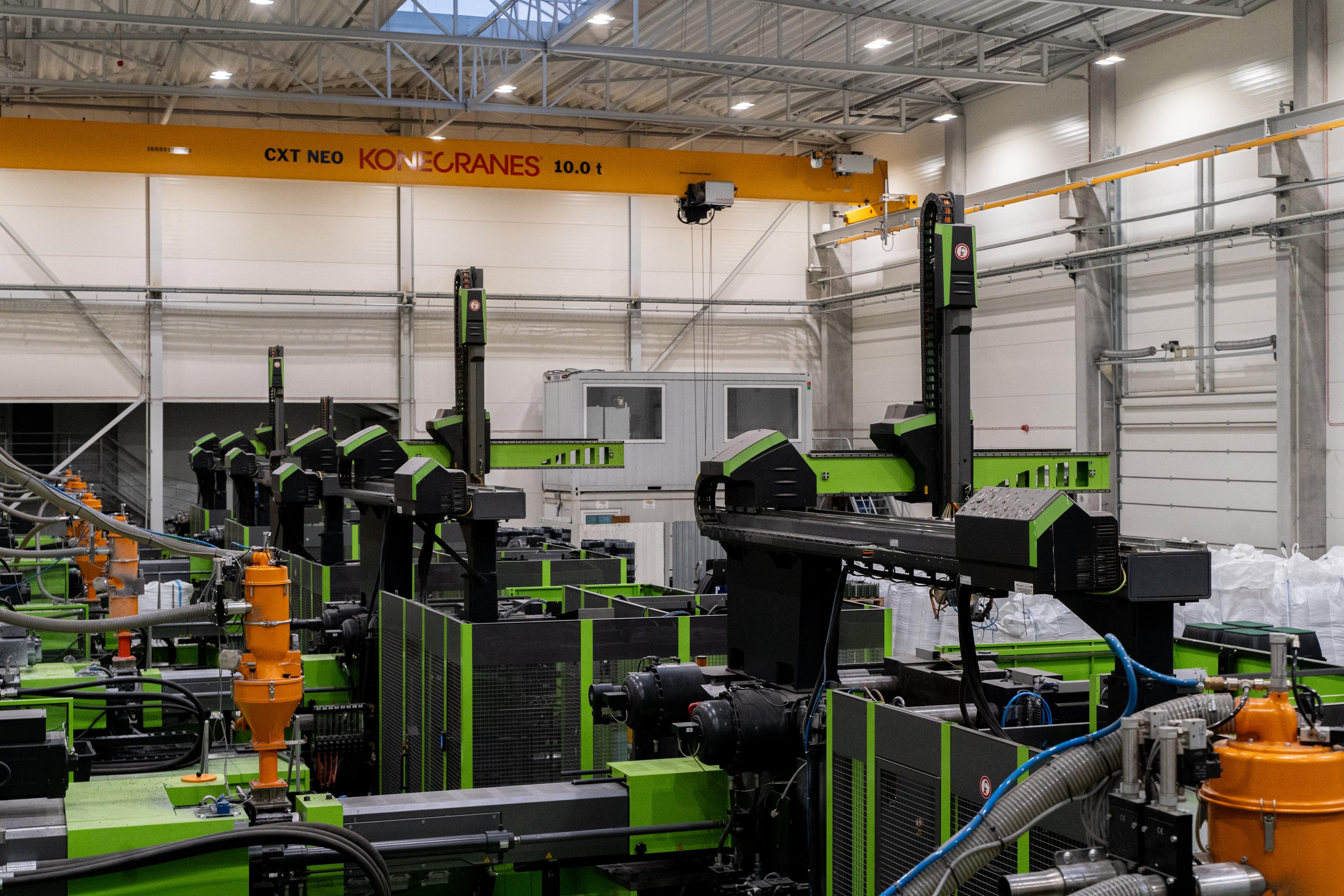
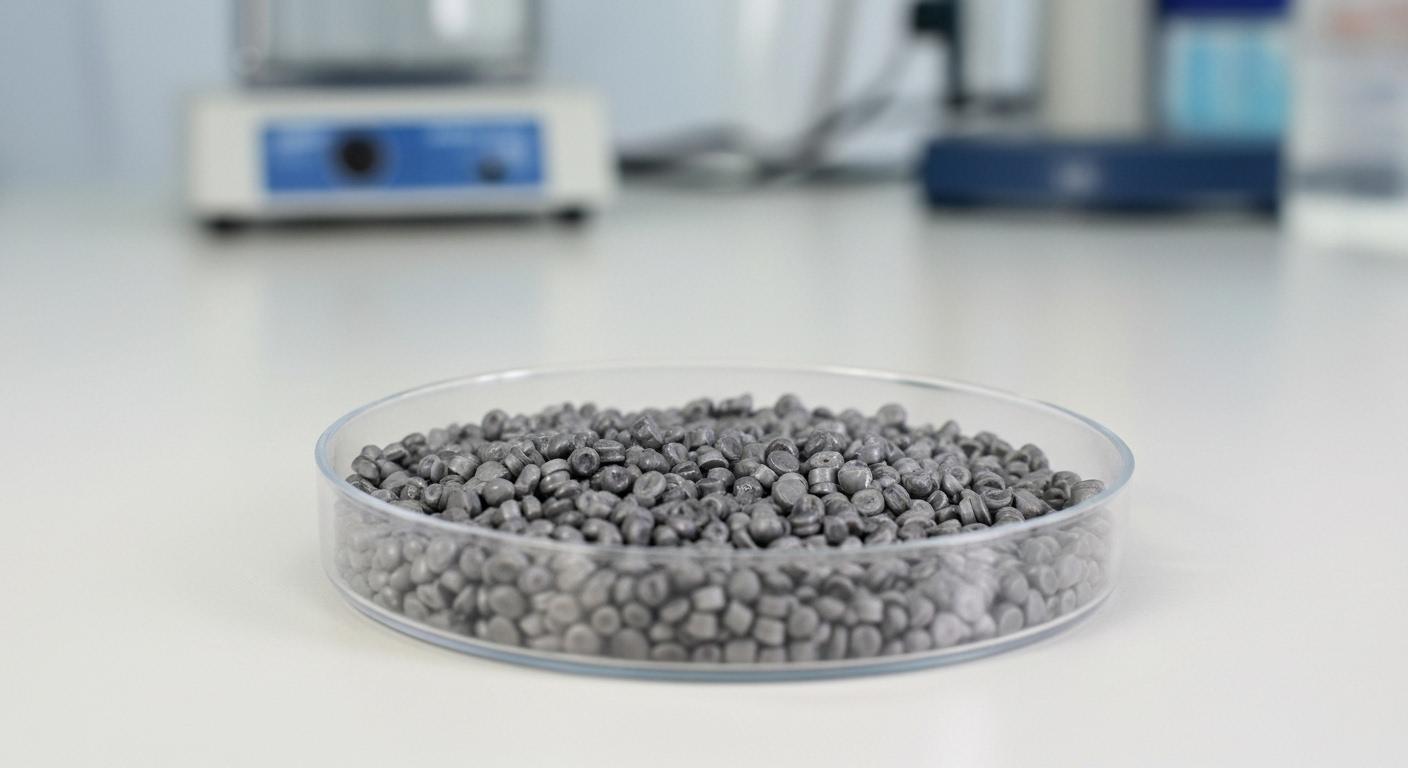
These products are manufactured using processes such as injection moulding, extrusion and machining. Plastics supplied as granules, rods, sheets and other semi-finished forms are used in technical components, guides and linear systems.
Their resistance to many solvents, moisture and weathering, combined with long service life, makes them a competitive alternative to metals in many applications.
Modern challenges and future directions: recycling, bioplastics and the circular economy
The global recycling rate for key polymers is estimated at only around 6.5%. One reason is the complexity of plastic waste streams, which contain many different polymer types, colours, additives and contaminants.
Many conventional plastics can persist in the environment for decades or centuries. Rather than completely biodegrading, they may gradually fragment into smaller particles. The production of plastics is also associated with greenhouse gas emissions, while inappropriate combustion or thermal degradation of certain materials can release harmful substances.
Bio-based and biodegradable plastics represent one area of development.
Bio-based plastics can be produced from renewable feedstocks such as corn, sugar cane or other biomass. Examples include PLA, PHA and bio-based PE. However, bio-based and biodegradable are not synonymous.
PLA and certain PHA grades can biodegrade under specific conditions, while bio-PE has essentially the same chemical structure as conventional polyethylene and does not biodegrade significantly faster simply because its raw material comes from biomass.
Packaging is currently one of the most important markets for biodegradable polymers. Many of these materials can be processed using technologies such as injection moulding and extrusion, although processing parameters and waste-stream compatibility must be carefully controlled.
The biodegradable plastics market reached an estimated value of approximately USD 10 billion in 2025 and is expected to continue growing at a double-digit annual rate.
An important challenge is that biodegradable materials can interfere with conventional mechanical recycling if they enter the wrong waste stream. Even relatively small quantities of incompatible polymers may reduce the quality of the resulting recyclate.
New regulations, including EU rules on single-use plastics, packaging and deposit return systems, are accelerating efforts to reduce unnecessary single-use products and encourage design for recycling.
What do modern plastics look like and where do we encounter them every day?
Modern plastics are often “background materials”. We rarely pay attention to them, yet they surround us almost everywhere.
At home, we encounter PE films used for food packaging, PET bottles, PS trays and PP containers. Furniture, appliances and consumer products may contain components made from ABS, polycarbonate and a wide range of other polymers.
In electronics and electrical systems, plastics are used in smartphone housings, cable insulation, connectors and flame-retardant components. Depending on the polymer, they can provide excellent electrical insulation, dimensional stability, wear resistance or sliding properties.
In medicine, plastics are used in disposable PP syringes, infusion sets and advanced implants made from materials such as PEEK or polycaprolactone, including components produced using 3D printing technologies.
In construction, PVC pipes, polyurethane foams and polymer window profiles have replaced heavier or more expensive traditional materials in many applications.
After more than a century of rapid development, the history of plastics is ultimately a story of balancing functionality with environmental responsibility.
Modern polymers offer enormous technical benefits, but their long-term future increasingly depends on better product design, effective collection and sorting systems, improved recycling technologies and the ability to keep valuable raw materials in circulation for as long as possible.
If you came here looking for information about a particular polymer or application, the table above provides a useful starting point for comparing material requirements with potential solutions.
In the automotive industry, replacing selected metal components with plastics can contribute significantly to vehicle weight reduction.
In medicine, polymers are used in products ranging from syringes and infusion sets to specialised surgical and diagnostic components.
The degree of polymer crystallinity influences properties such as strength, stiffness and dimensional stability. Depending on polymer structure, additives and processing conditions, manufacturers can produce flexible or rigid components with different levels of creep resistance, impact performance and service temperature.
These products are manufactured using processes such as injection moulding, extrusion and machining. Plastics supplied as granules, rods, sheets and other semi-finished forms are used in technical components, guides and linear systems.
Their resistance to many solvents, moisture and weathering, combined with long service life, makes them a competitive alternative to metals in many applications.
Modern challenges and future directions: recycling, bioplastics and the circular economy
The global recycling rate for key polymers is estimated at only around 6.5%. One reason is the complexity of plastic waste streams, which contain many different polymer types, colours, additives and contaminants.
Many conventional plastics can persist in the environment for decades or centuries. Rather than completely biodegrading, they may gradually fragment into smaller particles. The production of plastics is also associated with greenhouse gas emissions, while inappropriate combustion or thermal degradation of certain materials can release harmful substances.
Bio-based and biodegradable plastics represent one area of development.
Bio-based plastics can be produced from renewable feedstocks such as corn, sugar cane or other biomass. Examples include PLA, PHA and bio-based PE. However, bio-based and biodegradable are not synonymous.
PLA and certain PHA grades can biodegrade under specific conditions, while bio-PE has essentially the same chemical structure as conventional polyethylene and does not biodegrade significantly faster simply because its raw material comes from biomass.
Packaging is currently one of the most important markets for biodegradable polymers. Many of these materials can be processed using technologies such as injection moulding and extrusion, although processing parameters and waste-stream compatibility must be carefully controlled.
The biodegradable plastics market reached an estimated value of approximately USD 10 billion in 2025 and is expected to continue growing at a double-digit annual rate.
An important challenge is that biodegradable materials can interfere with conventional mechanical recycling if they enter the wrong waste stream. Even relatively small quantities of incompatible polymers may reduce the quality of the resulting recyclate.
New regulations, including EU rules on single-use plastics, packaging and deposit return systems, are accelerating efforts to reduce unnecessary single-use products and encourage design for recycling.
What do modern plastics look like and where do we encounter them every day?
Modern plastics are often “background materials”. We rarely pay attention to them, yet they surround us almost everywhere.
At home, we encounter PE films used for food packaging, PET bottles, PS trays and PP containers. Furniture, appliances and consumer products may contain components made from ABS, polycarbonate and a wide range of other polymers.
In electronics and electrical systems, plastics are used in smartphone housings, cable insulation, connectors and flame-retardant components. Depending on the polymer, they can provide excellent electrical insulation, dimensional stability, wear resistance or sliding properties.
In medicine, plastics are used in disposable PP syringes, infusion sets and advanced implants made from materials such as PEEK or polycaprolactone, including components produced using 3D printing technologies.
In construction, PVC pipes, polyurethane foams and polymer window profiles have replaced heavier or more expensive traditional materials in many applications.
After more than a century of rapid development, the history of plastics is ultimately a story of balancing functionality with environmental responsibility.
Modern polymers offer enormous technical benefits, but their long-term future increasingly depends on better product design, effective collection and sorting systems, improved recycling technologies and the ability to keep valuable raw materials in circulation for as long as possible.
If you came here looking for information about a particular polymer or application, the table above provides a useful starting point for comparing material requirements with potential solutions.
FAQ – frequently asked questions about the history of plastics
Who first proposed the concept of macromolecules and why was it important?
During the 1920s, Hermann Staudinger demonstrated that polymers consist of very long molecular chains rather than loose aggregates of small molecules.
He received the Nobel Prize in Chemistry in 1953 for his work.
His theory laid the foundation for modern polymer science and made it possible to deliberately design new plastics with specific mechanical, thermal and chemical properties.
Are all plastics made from crude oil?
Most conventional plastics, including PE, PP, PVC and PS, are produced mainly from petrochemical feedstocks.
However, renewable raw materials are increasingly being used. PLA can be manufactured from feedstocks derived from corn or sugar cane, while bio-based PE can be produced using ethanol obtained from biomass.
The fact that a material is bio-based does not automatically mean that it is biodegradable.
When did scientists begin discussing the problem of microplastics?
Scientific publications describing small plastic particles in marine environments appeared as early as the 1970s.
The term “microplastic” became widely used after 2000 as research expanded and microplastic contamination was identified in oceans, soils, drinking water and living organisms around the world.
Why do plastic waste materials take so long to degrade?
The chemical bonds forming the polymer chains of many conventional plastics are highly resistant to biological degradation.
Most microorganisms do not possess enzymes capable of efficiently breaking down materials such as polyethylene and polypropylene.
UV radiation, heat and mechanical forces can gradually weaken the material, but in many cases the plastic fragments into increasingly smaller particles rather than fully decomposing. These particles can eventually form microplastics and nanoplastics.
Can the development of plastics be reconciled with environmental protection?
Three areas are particularly important: designing products for recycling, developing efficient waste collection and processing infrastructure, and reducing unnecessary single-use applications.
Plastics can also help reduce resource and energy consumption through lightweight structures, efficient packaging and building insulation.
The main environmental challenge is therefore not simply the existence of plastics themselves, but how they are designed, used, collected and managed at the end of their useful life. Effective circular systems can help keep valuable polymer materials in use and reduce the demand for virgin raw materials.

