


Sustainable Development: Definition, Examples and the Role of Plastic Recycling
Sustainable Development: Definition, Examples and the Role of Plastic Recycling
Sustainable development is one of the most important concepts shaping the future of industry, environmental protection and economic growth. It describes an approach to progress that meets the needs of the present without compromising the ability of future generations to meet their own needs.
Today, sustainable development is more than an environmental ambition. It influences how governments manage natural resources, how businesses organise production and how societies respond to global challenges such as climate change, poverty and environmental degradation.
For the plastics industry, sustainability raises a particularly important question: how can manufacturers reduce waste and the consumption of virgin materials while maintaining reliable production and product quality?
At ML Polyolefins, this question is closely connected to the recycling of polypropylene (PP) and other polyolefin materials. Transforming suitable plastic waste into reusable raw materials demonstrates how circular economy principles can be applied in industrial practice.
Key Takeaways
- Sustainable development balances three pillars: environmental sustainability, social sustainability and economic sustainability.
- The concept was popularised by the Brundtland Commission in 1987 and focuses on meeting present needs while protecting opportunities for future generations.
- The United Nations adopted 17 Sustainable Development Goals (SDGs) and 169 associated targets in 2015 as part of the 2030 Agenda.
- Circular economy practices, including reuse, material recovery and plastic recycling, can help reduce waste and dependence on virgin resources.
- Recycling is one element of sustainability, but its environmental benefits depend on collection, processing, energy consumption and the final application of recovered materials.
- Cooperation between manufacturers, recyclers and technology providers can support more resource-efficient industrial production.
What Is Sustainable Development?
The most widely recognised definition of sustainable development comes from the 1987 report Our Common Future, prepared by the World Commission on Environment and Development, commonly known as the Brundtland Commission.
The report defines sustainable development as:
Development that meets the needs of the present without compromising the ability of future generations to meet their own needs.
This common definition remains central to international sustainability policy.
Its meaning extends beyond the protection of the natural environment. Sustainable development recognises that economic prosperity, social well-being and environmental protection are interconnected.
A society cannot achieve long-term prosperity if economic growth depends on the continuous degradation of ecosystems or the unsustainable use of natural resources.
At the same time, environmental policies must consider social needs, employment opportunities, access to essential services and the economic realities of developed and developing countries.
The concept therefore requires balancing different priorities rather than treating economic, social and environmental objectives as separate concerns.
Why Does Sustainable Development Matter?
The global population depends on natural resources for food, energy, housing, healthcare, infrastructure and industrial production.
However, many resources are finite, and their extraction and consumption can place pressure on ecosystems.
Climate change, biodiversity loss, pollution and increasing waste generation demonstrate the limitations of production and consumption models that do not sufficiently account for environmental impacts.
Sustainable development addresses these challenges through more efficient resource management, technological innovation, social inclusion and international cooperation.
Its long-term objective is to improve human well-being without undermining the ecological systems upon which that well-being depends.
The Three Pillars of Sustainable Development
Sustainability is commonly described through three interconnected dimensions: environmental, social and economic.
Achieving sustainable development requires these three pillars to work together.
1. Environmental Sustainability
Environmental sustainability focuses on preserving the natural environment and using resources in ways that maintain the functioning of ecosystems.
Its priorities include reducing pollution, protecting biodiversity, limiting greenhouse gas emissions and addressing global warming.
Examples of environmental sustainability include:
- Increasing energy efficiency in industrial facilities.
- Expanding renewable energy generation.
- Reducing unnecessary material consumption.
- Preventing waste and improving recycling systems.
- Protecting water resources, forests and natural habitats.
- Designing products that can be repaired, reused or recycled.
For manufacturing companies, environmental sustainability often begins with understanding material flows.
Knowing how much material enters a production process, how much becomes waste and how much can be recovered creates opportunities to improve resource efficiency.
Plastic recycling can contribute to this objective by recovering usable polymers from suitable waste streams and returning them to production.
2. Social Sustainability
Social sustainability concerns human well-being, fairness and opportunities within communities.
It includes access to healthcare, education, clean water, safe working conditions and equal opportunities.
Social equity is important because development cannot be considered genuinely sustainable when its benefits are distributed unequally or when vulnerable populations bear disproportionate environmental and economic costs.
The concept of intragenerational equity addresses fairness among people living today, while intergenerational equity concerns the rights and opportunities of future generations.
Businesses can support social sustainability through responsible employment practices, workplace safety, professional development and transparent relationships with employees and local communities.
Education for Sustainable Development (ESD) also plays a significant role by helping people understand how economic decisions, social conditions and environmental challenges are connected.
3. Economic Sustainability
Economic sustainability means creating conditions for long-term prosperity without exhausting the resources needed to support future economic activity.
It does not reject economic growth. Instead, it encourages growth based on innovation, efficient resource use, responsible investment and resilient business models.
In manufacturing, economic sustainability may involve reducing raw material losses, improving production efficiency, extending product lifespans and recovering valuable materials from waste.
For example, introducing recycled polymers into suitable applications can help companies diversify material sourcing and potentially reduce dependence on virgin plastics.
However, financial benefits depend on material prices, technical requirements, processing conditions and the overall cost of production.
A sustainable solution must therefore be evaluated from both environmental and economic perspectives.
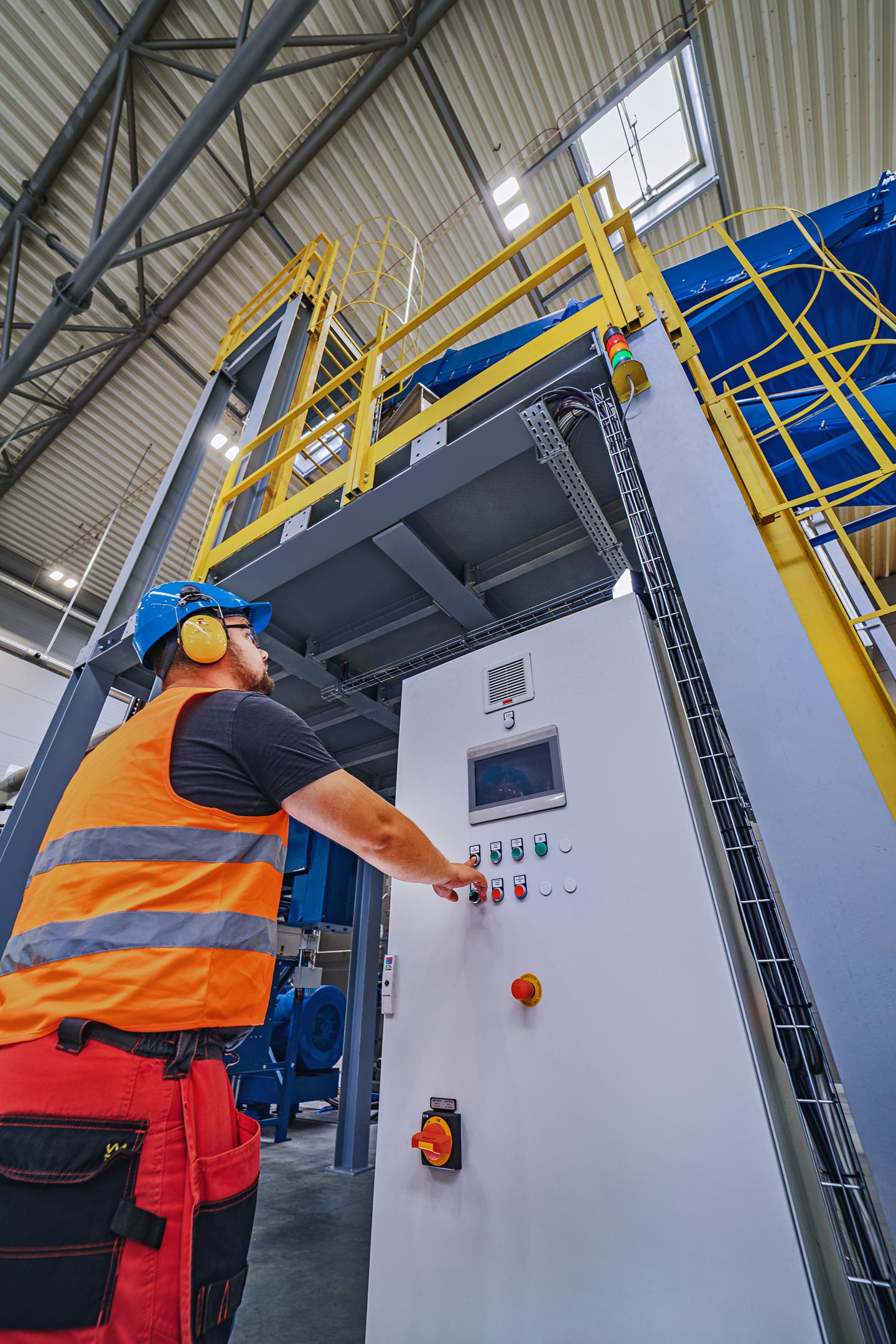
Natural Resources and the Circular Economy
Natural resources are essential to industrial development, but their availability and environmental impacts create important challenges.
Traditional linear economic models follow a relatively simple pattern: extract resources, manufacture products, consume them and dispose of the resulting waste.
This approach can lead to increasing demand for virgin materials and growing pressure on waste management systems.
The circular economy offers an alternative.
Its objective is to maintain the value of products, components and materials within the economy for as long as reasonably possible.
Circular practices include preventing unnecessary consumption, extending product lifespans, repairing equipment, reusing products and recycling materials that can no longer be used in their original form.
How Does Plastic Recycling Support a Circular Economy?
Plastic recycling allows suitable waste materials to become secondary raw materials for further manufacturing.
In mechanical recycling, the process may involve sorting, shredding, washing, drying, melting, filtering and regranulation, depending on the characteristics of the waste stream.
The resulting recyclate can then be assessed for use in new products.
For polyolefins such as polypropylene and polyethylene, recycled materials may be suitable for manufacturing technical components, containers, garden products, transport packaging and other industrial goods.
Their suitability depends on factors such as mechanical properties, melt flow behaviour, material composition and regulatory requirements.
The purpose of recycling is not simply to process waste. It is to recover material value and make that material useful again.
Nevertheless, recycling has limitations. Contamination, incompatible polymer mixtures, material degradation and collection losses can affect recycling efficiency and the properties of the final product.
For this reason, effective circular economy systems must combine good product design, appropriate waste collection and reliable recycling technologies.
Sustainable Development Goals: The UN 2030 Agenda
In September 2015, United Nations member states adopted the 2030 Agenda for Sustainable Development.
The Agenda includes 17 Sustainable Development Goals and 169 associated targets intended to guide global action towards 2030.
The Sustainable Development Goals aim to address poverty, inequality, environmental degradation and other interconnected challenges.
Their scope covers human health, education, energy, economic development, infrastructure, responsible consumption, climate action and the protection of ecosystems.
Several goals are particularly relevant to the manufacturing and recycling industries.
| Sustainable Development Goal | Relevance to industry and recycling |
|---|---|
| SDG 8 – Decent Work and Economic Growth | Responsible employment, productivity and resource-efficient economic development |
| SDG 9 – Industry, Innovation and Infrastructure | Investment in industrial technologies and more sustainable production systems |
| SDG 12 – Responsible Consumption and Production | Efficient resource use, waste prevention, reuse and recycling |
| SDG 13 – Climate Action | Measures to reduce greenhouse gas emissions |
| SDG 17 – Partnerships for the Goals | Cooperation between businesses, governments, research institutions and civil society |

How Much Progress Has Been Made Towards the SDGs?
Progress towards the Sustainable Development Goals remains uneven.
According to the United Nations Sustainable Development Goals Report 2024, only 17% of the targets for which sufficient progress data were available were on track to be achieved by 2030.
The 2025 report found that 35% of assessable targets were either on track or showing moderate progress.
The UN’s July 2026 assessment reported a corresponding figure of 36%, with substantial challenges remaining in many areas.
These figures reflect different reporting years and progress categories, so they should not be treated as directly interchangeable measures.
Climate change, international conflicts, inequalities and financing gaps continue to influence the ability of countries to achieve sustainable development.
The next SDG Summit is scheduled for September 2027 at United Nations Headquarters in New York.
These global challenges highlight the need for cooperation between governments, the private sector, international organisations and civil society.
Education for Sustainable Development and Future Generations
Education for Sustainable Development helps people understand the connections between human activity, economic systems and the environment.
Its purpose is not only to provide information about sustainability, but also to develop the knowledge and skills needed to make informed decisions.
The importance of education was already recognised in Agenda 21, adopted at the 1992 United Nations Conference on Environment and Development in Rio de Janeiro.
Education subsequently became an important part of international sustainability initiatives, including the UN Decade of Education for Sustainable Development.
Within the 2030 Agenda, SDG target 4.7 specifically addresses education for sustainable development, while SDG target 12.8 focuses on ensuring that people have relevant information and awareness for sustainable development and lifestyles in harmony with nature.
In industrial organisations, sustainability education can include training on material separation, waste prevention, energy efficiency and the safe handling of resources.
Such activities help employees understand how everyday decisions influence environmental performance.
Sustainable Development in Practice: Examples for Businesses and Communities
Sustainable development becomes meaningful when its principles are translated into practical activities.
Different organisations require different approaches depending on their resources, infrastructure and local conditions.
Sustainable Manufacturing
Manufacturers can improve sustainability by reducing material losses, increasing energy efficiency and selecting appropriate raw materials.
Examples include using recycled polymers in technically suitable products, improving production processes to minimise scrap and designing components for longer service life.
Digital monitoring and process optimisation can also help identify unnecessary energy or material consumption.
Renewable Energy and Green Infrastructure
Renewable energy sources, including solar and wind power, can contribute to reducing dependence on fossil fuels.
Green infrastructure provides another practical approach.
Examples include energy-efficient buildings, urban green spaces, systems for managing stormwater and infrastructure designed to reduce the environmental impacts of urban development.
Sustainable Transport
Reliable public transportation, safe walking routes and cycling infrastructure can support more resource-efficient mobility.
For industrial organisations, transport planning may also include optimising logistics, consolidating shipments and reducing unnecessary movements of materials.
Local Circular Economy Initiatives
Local businesses and communities can support circular economy models through repair services, reuse programmes, separate waste collection and cooperation with recycling companies.
Such initiatives help keep products and materials in use and can reduce reliance on landfill disposal.
Participatory governance, involving residents, businesses and public institutions, can help ensure that sustainability policies reflect local needs.
The Role of ML Polyolefins in Industrial Plastic Recycling
For companies operating in the plastics sector, one of the practical challenges of sustainable development is finding productive uses for recovered materials.
ML Polyolefins operates in the polyolefin recycling sector, focusing on the recovery and reprocessing of plastic materials for industrial applications.
Polypropylene recycling is particularly relevant because PP is widely used in packaging, household products, industrial components and construction-related applications.
Recovering suitable polypropylene waste and converting it into regranulate creates opportunities to replace a portion of virgin raw materials in applications where the recycled material meets the required specifications.
From Plastic Waste to Secondary Raw Material
The journey from waste to reusable material requires several stages of processing and quality assessment.
Depending on the characteristics of the feedstock, recycling operations may include material sorting, preparation, cleaning, melting, filtration and pelletising.
Quality control plays an important role because manufacturers need materials with properties appropriate for their production processes.
Parameters such as the melt flow index (MFI), density and mechanical performance can help determine whether a recycled polymer is suitable for a particular application.
Reliable material selection also requires consideration of consistency between production batches and the conditions under which the recyclate will be processed.
For manufacturers, this means that choosing recycled polypropylene should be based on technical requirements rather than environmental claims alone.
Can Recycled Plastics Reduce Environmental Impact?
Using recycled plastics can reduce demand for virgin fossil-based materials and, under suitable conditions, lower environmental impacts.
However, the environmental performance of recycling depends on multiple factors.
These include the energy required for collecting and processing waste, transport distances, sorting efficiency, recycling yields and the materials being replaced.
Life-cycle assessment (LCA) provides a structured method for evaluating these impacts.
Therefore, claims about carbon footprint reductions should be supported by relevant data rather than assuming that every tonne of recycled plastic delivers an identical environmental benefit.
From an economic perspective, recycled polymers can also provide manufacturers with additional sourcing options and support more resilient material supply strategies.
What Can Businesses and Consumers Do to Support Sustainable Development?
Achieving sustainable development requires action across supply chains and communities.
For Manufacturing Companies
Businesses can start by reviewing their resource consumption, identifying major waste streams and assessing opportunities for material recovery.
They can also work with recycling partners to establish appropriate collection and processing arrangements for suitable plastic waste.
Product development teams can consider design for recycling principles, while purchasing departments can evaluate recycled raw materials against the required technical specifications.
For Governments and Local Authorities
Public authorities play a role in planning waste management systems, investing in infrastructure and supporting environmental education.
Policies that encourage resource efficiency, safe waste disposal and responsible material management can help create conditions for more sustainable economic activity.
For Consumers
Individuals can contribute through informed purchasing decisions, waste prevention, correct separation of recyclable materials and reuse where practical.
Choosing durable products and following local recycling guidance can help reduce unnecessary waste.
However, consumer action alone cannot solve the challenges of sustainability. Effective progress also depends on industrial innovation, public infrastructure and coordinated policies.
Conclusion: Sustainable Development Requires Practical Action
Sustainable development connects environmental protection, economic prosperity and social well-being into a common long-term framework.
The Brundtland definition reminds us that the needs of future generations must be considered alongside the needs of the present.
The United Nations Sustainable Development Goals provide a global framework, but meaningful progress depends on practical decisions made by governments, businesses and communities.
Within the plastics industry, circular economy principles offer opportunities to reduce waste, recover material value and improve the sustainable use of resources.
Recycling polypropylene and other polyolefins is one part of this transition.
By evaluating recycled materials against technical requirements and developing effective cooperation across the value chain, manufacturers can explore opportunities for more resource-efficient production.
Have questions about recycled PP?
Talk to our team and find the right material for your production needs.
FAQ – Frequently Asked Questions About Sustainable Development
What is the common definition of sustainable development?
Sustainable development is generally defined as development that meets present needs without compromising the ability of future generations to meet their own needs. This definition was popularised by the Brundtland Commission in its 1987 report Our Common Future.
What are the three pillars of sustainable development?
The three pillars are environmental sustainability, social sustainability and economic sustainability. Together, they address ecological protection, human well-being and long-term economic prosperity.
What are the 17 Sustainable Development Goals?
The Sustainable Development Goals are 17 global goals adopted by United Nations member states in 2015. They include 169 associated targets addressing poverty reduction, education, healthcare, equality, clean energy, responsible production, climate action and other development priorities.
How does the circular economy contribute to sustainable development?
A circular economy seeks to maintain the value of products and materials through waste prevention, reuse, repair and recycling. It can improve resource efficiency and reduce demand for new raw materials, while supporting innovative business models.
Why is plastic recycling important for environmental sustainability?
Plastic recycling can help recover useful materials, reduce waste disposal and decrease reliance on virgin fossil-based resources. Its environmental benefits depend on collection efficiency, recycling technologies, energy requirements and the final application of the recycled material.
Is economic growth compatible with sustainability?
Yes. Economic sustainability seeks long-term prosperity supported by innovation, efficient resource management and responsible investment. The objective is to create economic value while managing environmental impacts and social needs.
What is the role of education in sustainable development?
Education for Sustainable Development helps people understand the relationships between economic, social and environmental systems. It promotes informed decision-making and prepares present and future generations to address sustainability challenges.
How can manufacturers contribute to climate action?
Manufacturers can improve energy efficiency, reduce waste, evaluate lower-impact materials, invest in appropriate technologies and measure their environmental performance. These measures can contribute to climate action when implemented and assessed effectively.

